
Urdu Typing Speed: Improve Speed, Accuracy, and Typing Efficiency
⏱️ Urdu Typing Speed Test
Retype the sentence below as fast and accurately as you can:
Urdu typing speed reflects how quickly and accurately you type using an Urdu keyboard. Strong typing skills save time and improve daily productivity. Better typing accuracy also reduces mistakes and keeps your work smooth. In this guide, you’ll learn how finger movement, muscle memory, smart habits, and a practical improvement plan can help increase your WPM while maintaining consistent accuracy.
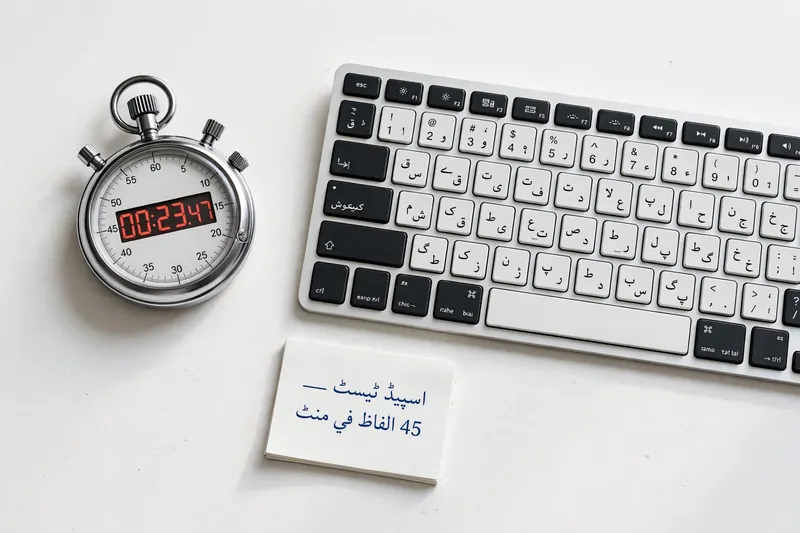
What Is Urdu Typing Speed and Why Does It Matter?
Understanding Urdu Typing Speed
Urdu Typing Speed measures how quickly you type Urdu text while maintaining accuracy. Fast Urdu typing is not only about pressing keys faster. It also means making fewer mistakes and keeping a steady rhythm. Consistent speed improves your Urdu typing skills over time. It helps you finish work smoothly without stopping to fix frequent errors. Strong typing habits always outperform rushed typing.
Benefits of Faster Urdu Typing
Faster Urdu typing increases productivity because you complete writing tasks in less time. It also reduces hand fatigue by encouraging smoother finger movement. Better keyboard skills create a more efficient workflow and improve focus. Professionals, writers, and data entry operators benefit from consistent typing efficiency every day. As your speed and accuracy improve together, your confidence grows, and writing in Urdu feels more natural and effortless. Research in human-computer interaction shows that efficient typing habits improve performance and reduce cognitive load over time, supporting long-term productivity gains.
How Finger Movement Affects Urdu Typing Speed
Proper Finger Placement
Correct finger placement builds the foundation for faster Urdu typing. Place your fingers in a comfortable home position and let each finger handle nearby keys. This habit reduces unnecessary hand movement and improves control. Keep your wrists relaxed instead of bending them upward. A neutral wrist position helps you type longer without discomfort. Learning your Urdu keyboard layout also makes finger movement more natural. Over time, your hands begin reaching the correct keys with less effort and greater accuracy.
Efficient Finger Movement
Fast typing comes from smart movement, not large movement. Keep your finger movement short and controlled. Avoid stretching one finger across distant keys when another finger can reach them. Stronger fingers should handle frequent keys whenever possible. This approach improves typing rhythm and increases keyboard efficiency. As your muscle coordination develops, your hands move smoothly across the keyboard. Small improvements in movement often produce bigger gains than simply trying to type faster.
Hand Posture and Ergonomics
Good posture supports both speed and comfort. Sit upright with your shoulders relaxed and your feet flat on the floor. Position the computer keyboard so your elbows stay close to your body. Keep your wrists straight instead of resting them on hard edges. Proper ergonomics reduces strain on your hands and forearms. A comfortable keyboard layout also helps maintain consistent finger movement during long writing sessions. Guidance from organizations such as OSHA and Microsoft consistently highlights proper workstation ergonomics to reduce fatigue and improve computer performance.
Build Muscle Memory for Faster Urdu Typing
What Is Muscle Memory?
Muscle memory is your brain’s ability to remember repeated movements. Each typing session strengthens the connection between your fingers and the keyboard. Through repetition, your brain recognizes key locations without conscious effort. This process, known as motor learning, gradually turns good typing habits into automatic actions. As a result, you spend less time searching for keys and more time focusing on your writing.
Why Muscle Memory Increases Speed
Strong muscle memory helps you improve Urdu typing speed because your fingers react almost instantly. You depend less on looking at the keyboard and more on natural movement. This reduces hesitation between keystrokes and creates a steady typing flow. Fast keyboard typing develops through repetition, not rushing. As your confidence grows, typing efficiency improves while accuracy remains consistent. Research in motor learning shows that repeated, correct movements strengthen long-term skill development and improve performance.
Daily Habits That Strengthen Muscle Memory
Consistency matters more than long practice sessions. Spend a small amount of time typing every day instead of practicing for hours once a week. Repeat common Urdu words and frequently used phrases to reinforce finger patterns. Focus on smooth movement rather than maximum speed. Avoid rushed typing because it creates bad habits that are difficult to correct. Touch typing techniques, combined with regular keyboard use, gradually increase productivity and make accurate Urdu typing feel effortless.
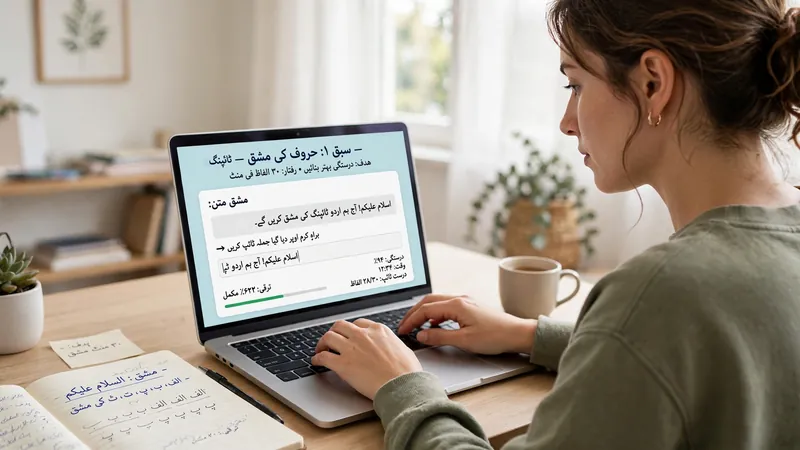
Daily Routine to Improve Urdu Typing Speed
A Simple Daily Improvement Plan
A simple routine delivers better results than occasional long sessions. Start with a two-minute warm-up to loosen your fingers and settle into a steady rhythm. Next, spend a focused period writing without distractions. Give your full attention to smooth finger movement and clean typing. Take short breaks to relax your hands and eyes before continuing. At the end of your session, review your mistakes and notice repeated patterns. Correcting small errors each day prevents bad habits from growing. Stay consistent with your routine. Daily effort builds lasting improvement much faster than irregular practice.
Weekly Progress Strategy
Set small goals that match your current ability. Improve one habit at a time instead of changing everything together. Track your progress in a notebook or spreadsheet to see steady improvement. Celebrate small milestones because they keep you motivated. These simple steps create long-term habits that support continuous growth in Urdu typing speed and overall efficiency.
Staying Consistent Without Burnout
Avoid pushing yourself beyond your comfort level every day. Long sessions often reduce focus and increase mistakes. Follow a healthy routine that includes regular breaks and enough rest. Recovery helps your hands and mind perform better. A balanced schedule keeps you motivated and supports steady improvement over time.
Common Mistakes That Reduce Urdu Typing Speed
Looking at the Keyboard Too Often
Looking at the keyboard breaks your typing rhythm and slows every sentence. Your eyes leave the screen, and your fingers pause while searching for keys. This habit delays finger movement and interrupts your natural flow. Trust your growing muscle memory instead of checking every key.
Chasing Speed Instead of Accuracy
Many people try to type faster before building strong typing accuracy. This approach usually creates more typing errors. Every correction interrupts your flow and wastes valuable time. Focus on clean, accurate typing first. Natural speed improvement follows as your keyboard skills become stronger. Consistent accuracy creates a reliable foundation for faster Urdu typing.
Poor Finger Habits
One-finger typing limits your speed and tires your hands quickly. Random finger usage creates confusion and slows movement. Excessive hand movement also wastes energy. Train your fingers to follow consistent movement patterns for smoother and faster typing.
Ignoring Ergonomics
Poor posture places extra pressure on your wrists and shoulders. Wrist pain and fatigue reduce comfort during longer writing sessions. An uncomfortable position also lowers productivity. Good ergonomics support faster typing and help you maintain consistent performance every day.
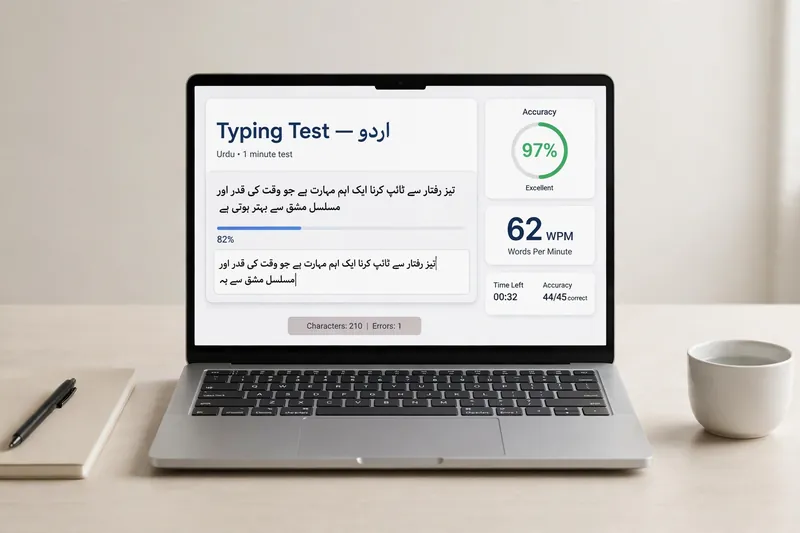
Accuracy vs Speed: Which Should You Prioritize?
Why Accuracy Comes First
Typing accuracy should always come before speed. Fewer typing errors mean fewer interruptions and less time spent fixing mistakes. Accurate typing creates better consistency and builds confidence with every session. As your fingers learn correct movements, your speed increases naturally. Strong accuracy also improves productivity because your work requires fewer revisions and flows more smoothly.
Finding the Right Balance
The best approach combines steady speed with high precision. Increase your pace gradually instead of rushing. Let each improvement become a natural habit before moving faster. This method protects your accuracy while building confidence. Sustainable improvement comes from patience, consistent effort, and smart habits. Over time, your typing becomes faster, smoother, and more reliable without sacrificing quality.
A Long-Term Speed Improvement Plan
Beginner Stage
Start by building correct typing habits instead of chasing higher speed. Learn efficient finger movement and become familiar with your Urdu keyboard layout. Keep your hands relaxed and avoid unnecessary movement. Focus on consistency every day. Strong habits formed early make future improvement easier and help prevent mistakes that slow your progress.
Intermediate Stage
Once your movements feel natural, work on improving your typing rhythm. Reduce hesitation between keystrokes by trusting your muscle memory. Keep your focus on smooth, controlled typing instead of rushing. As your confidence grows, your Urdu typing speed and typing efficiency will improve without sacrificing accuracy.
Advanced Stage
Advanced typists maintain high accuracy even at faster speeds. They reduce fatigue by using proper posture and efficient finger movement throughout long writing sessions. They also refine small habits that improve comfort and consistency. This continuous improvement supports professional productivity and helps writers, translators, and office workers complete tasks with greater speed and confidence.
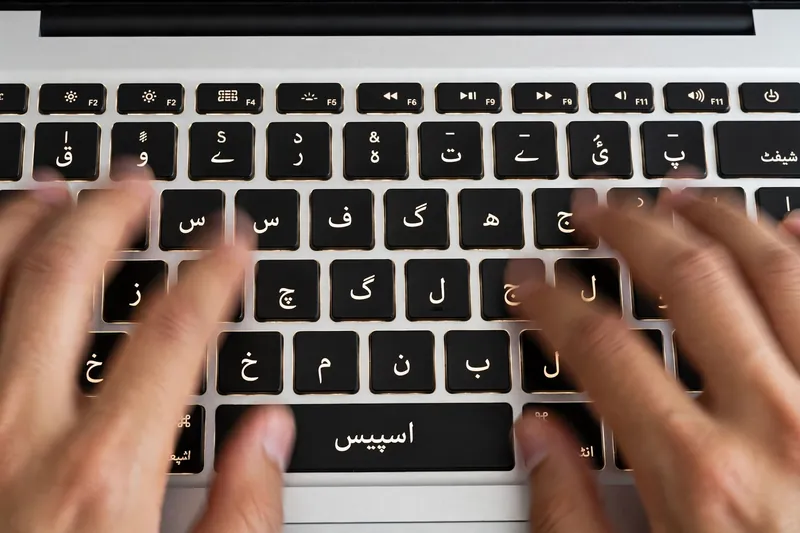
Frequently Asked Questions
What is a good Urdu typing speed?
A good Urdu typing speed depends on your experience and work needs. Most users benefit more from consistent accuracy than high WPM. Steady improvement with fewer mistakes delivers better long-term results than typing as fast as possible.
How can I improve Urdu typing speed naturally?
Improve Urdu typing speed by following a daily routine, using correct finger placement, maintaining good posture, and strengthening muscle memory. Stay consistent, review your mistakes, and increase your speed gradually while keeping your typing accurate.
Does finger placement really increase typing speed?
Yes. Proper finger placement reduces unnecessary hand movement and improves keyboard efficiency. Your fingers reach keys faster and with less effort. Over time, this creates smoother movement, better control, and faster Urdu typing.
Why is muscle memory important in Urdu typing?
Muscle memory helps your fingers find keys automatically through repetition. You spend less time thinking about key locations and more time writing. This improves typing rhythm, builds confidence, and supports long-term speed improvement.
Should I focus on speed or accuracy first?
Always focus on accuracy first. Correct typing creates strong habits and reduces typing errors. As your movements become more natural, your speed increases automatically. This balanced approach delivers lasting improvement and better overall productivity.
Conclusion
Improving Urdu typing speed takes patience, not shortcuts. Small daily improvements create lasting results over time. Finger movement, muscle memory, proper posture, and typing accuracy work together to build faster and more efficient typing. Stay consistent, trust the process, and develop sustainable habits. Strong fundamentals will help you type with greater speed, confidence, and productivity every day.
Related Guides
- Urdu Typing Test
- How to Type in Urdu
- Urdu Typing Lessons: Complete Beginner to Advanced Learning Guide
Try our free Urdu Keyboard tool to type Urdu online instantly.