
Urdu Typing Practice: A Complete Daily Guide to Building Accuracy and Confidence
✍ Urdu Word Practice Drill — Try It Now
Type the Urdu word shown below using your Urdu keyboard, then press Check. Build your streak!
سلام
Urdu Typing Practice helps you write accurately and confidently in the Urdu language. Regular practice builds familiarity with the Urdu keyboard and makes daily typing feel more natural. Small, consistent sessions often bring better results than occasional long sessions. This guide focuses on accuracy, finger habits, beginner exercises, sample words, and daily routines. You will also learn practical ways to strengthen your Urdu language typing skills using a Unicode Urdu keyboard.
What Is Urdu Typing Practice?
Urdu typing practice means regularly typing Urdu words, phrases, and sentences to build strong keyboard habits. It helps you become comfortable with the Urdu script and improves your ability to write accurately.
Many people type only when they need to complete a task. This occasional approach offers limited learning. Structured practice follows a routine and focuses on specific typing exercises. It helps you learn key positions, recognize common letter patterns, and develop better keyboard skills.
Correct habits matter from the beginning. Good hand placement and consistent finger movement create a strong foundation. These habits make Urdu writing practice more effective and less frustrating.
Repetition also plays an important role. When you type the same letters and words regularly, your hands become familiar with their locations on the Urdu keyboard. Over time, this process feels more natural.
Urdu typing practice benefits many people. Students can complete assignments more comfortably. Professionals can handle Urdu documents with confidence. Language learners can strengthen their understanding of the Urdu script, including Nastaliq text. Whether you use a standard Urdu keyboard or Unicode Urdu layout, regular practice helps build lasting typing skills.
Getting Familiar with the Urdu Keyboard
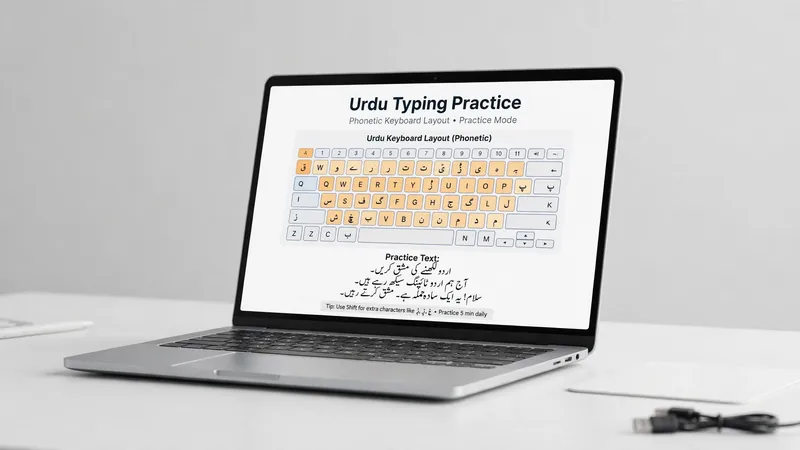
Learning the Urdu keyboard is an important step in Urdu typing practice. A good understanding of key positions helps you type with greater accuracy. It also makes daily practice more comfortable. Before moving to longer exercises, spend time exploring the keyboard layout and common Urdu characters.
Understanding Keyboard Layouts
Different Urdu keyboard layouts place letters in different positions. Some people use a phonetic keyboard because it connects Urdu letters with similar English sounds. Others prefer an Urdu Unicode keyboard designed specifically for Urdu writing. Start by identifying frequently used letters and their locations. Pay attention to characters that appear often in everyday words. This simple habit helps you recognize patterns within the Urdu script and reduces confusion during practice sessions.
Learning Key Locations
Focus on memorizing the keys you use most often. Practice small groups of letters instead of learning the entire keyboard at once. This method feels less overwhelming and improves keyboard familiarity. Repeated use helps your fingers remember where common characters appear. Over time, finding letters becomes more natural and requires less effort.
Developing Keyboard Awareness
Try to look at the screen more often than the keyboard. This habit helps you notice mistakes quickly and strengthens character recognition. Use steady hand movements while typing. Avoid rushing between keys. With regular Urdu keyboard practice, your hands begin to move naturally across the keyboard layout. This gradual improvement creates a stronger foundation for future typing exercises.
Correct Finger Habits for Urdu Typing
Strong finger habits make Urdu typing practice more effective. Good habits reduce unnecessary movement and help you type with better control. They also create a solid foundation for accurate Urdu writing. Once you understand the keyboard layout, focus on how your hands move across the keys.
Finger Placement Basics
Place both hands in a relaxed position on the keyboard. Keep your wrists straight and your shoulders comfortable. Avoid stretching your fingers too far for each key. Small and controlled movements work best. Try to maintain balanced movement between both hands. This approach reduces strain and helps you stay comfortable during longer practice sessions. Good posture also supports better focus and consistent keyboard training.
Consistent Finger Usage
Assign specific fingers to certain keyboard areas whenever possible. Use the same finger for the same group of keys during practice. This habit helps build muscle memory over time. As your fingers repeat these movements, they begin to locate keys more naturally. Consistency plays a key role in developing keyboard familiarity.
Common Beginner Mistakes
Many beginners press keys with random fingers. This habit creates confusion and slows learning. Others look at the keyboard after every few letters. Constant keyboard watching makes it harder to remember key locations. Poor hand positioning can also lead to uncomfortable movements and typing errors. Focus on steady practice, proper finger placement, and controlled movement. These simple habits improve typing accuracy and prepare you for more advanced Urdu typing exercises.

Beginner Urdu Typing Exercises
Now that you understand the Urdu keyboard and finger placement, start practicing with simple exercises. These activities build confidence and strengthen key recognition. Begin with small steps and increase difficulty gradually.
Single Letter Practice
Start by repeating common Urdu letters several times. Focus on finding each key without rushing. This exercise improves letter recognition and helps you remember key locations. Practice a few letters daily until they feel familiar. Consistent repetition builds a strong foundation for Urdu typing exercises.
Two-Letter Combinations
After learning individual letters, practice common two-letter combinations. These patterns appear frequently in Urdu words and sentences. Repeating them helps your brain recognize letter sequences more easily. You also become more comfortable moving between nearby keys during Urdu keyboard practice.
Short Word Practice
Move on to short and familiar words. Choose words you see often in daily life. Examples include گھر, وقت, دوست, and پانی. Familiar vocabulary helps you focus on typing rather than spelling. This stage connects key recognition with real Urdu text typing and makes practice more meaningful.
Repetition Drills
Repeat the same words and short phrases several times. Focus on entering each character correctly. If you notice mistakes, pause and type the word again. These repetition drills reinforce accuracy and improve confidence. Regular Urdu writing practice with repeated patterns creates stronger typing habits and prepares you for longer sentences.
Sample Urdu Words for Daily Practice
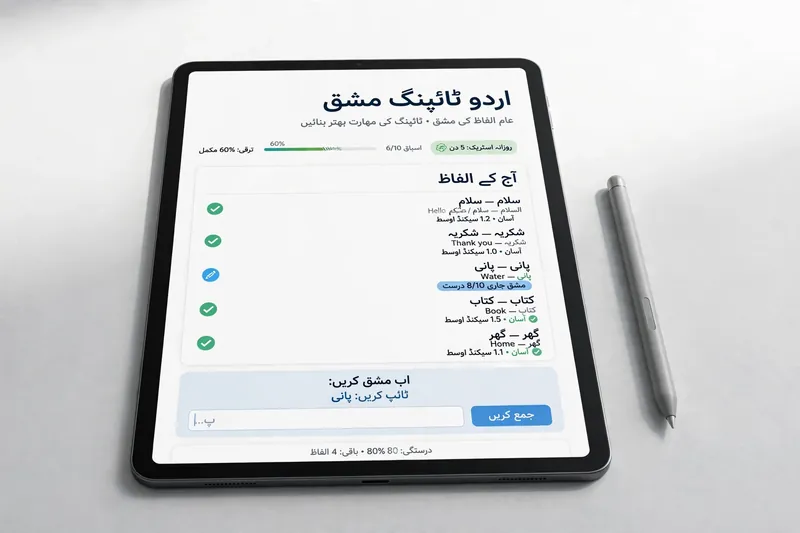
Practicing familiar words helps you recognize common letter patterns. It also improves comfort with the Urdu keyboard. Use these word groups during your daily sessions and repeat them regularly.
Common Everyday Words
- گھر
- کتاب
- دوست
- وقت
- پانی
School and Education Words
- استاد
- طالبعلم
- سبق
- جماعت
- تعلیم
Work and Office Words
- دفتر
- کمپیوٹر
- فائل
- ریکارڈ
- معلومات
These words appear in everyday communication, education, and work environments. Because they are familiar, they help learners focus on typing correctly. Repeating the same words also strengthens keyboard skills and improves character recognition. Stay consistent with your practice routine. Daily exposure to common vocabulary makes Urdu language typing feel more natural and comfortable over time.
Sample Urdu Sentences for Practice
After practicing individual words, move to complete sentences. Sentence practice helps you connect words naturally and recognize common writing patterns. It also improves your comfort with everyday Urdu text.
Beginner Sentences
Start with simple sentences that use familiar vocabulary.
- میرا نام احمد ہے۔
- آج موسم خوشگوار ہے۔
- میں روز اردو ٹائپنگ کی مشق کرتا ہوں۔
- یہ ایک اچھی کتاب ہے۔
- میں اپنے دوست کے ساتھ گیا۔
Everyday Sentences
Practice sentences that reflect daily activities and common communication.
- طلبہ کو روزانہ مشق کرنی چاہیے۔
- کمپیوٹر پر اردو لکھنا آسان ہو سکتا ہے۔
- میں ہر شام اپنی اسائنمنٹ مکمل کرتا ہوں۔
- استاد نے آج نیا سبق پڑھایا۔
- ہم روز نئی چیزیں سیکھتے ہیں۔
Longer Practice Sentences
Once simple sentences feel comfortable, practice slightly longer ones.
- مسلسل مشق سے اردو کی بورڈ سے واقفیت بہتر ہوتی ہے۔
- درست حروف کا استعمال صاف اور درست تحریر بنانے میں مدد دیتا ہے۔
- روزانہ چند منٹ کی مشق مضبوط ٹائپنگ عادات پیدا کرتی ہے۔
- باقاعدہ مشق سے اردو لکھنے میں اعتماد بڑھتا ہے۔
Sentence practice develops familiarity with word patterns and common sentence structures. It also helps you recognize frequently used words more quickly. As you progress, reading and typing complete thoughts becomes more natural.
Accuracy-Focused Urdu Typing Practice
Accuracy should remain your main focus throughout Urdu typing practice. Correct typing creates clear writing and helps readers understand your message. Strong accuracy habits also support long-term learning and better keyboard training.
Why Accuracy Matters
Accurate typing improves communication. Readers can understand your words without confusion. It also reduces the need for frequent corrections. Clean and correct text looks more professional and easier to read. When you focus on typing accuracy, you build confidence and develop stronger writing habits.
Checking Mistakes Carefully
Review your typed text after each practice session. Look for missing letters, incorrect characters, and spelling mistakes. Pay attention to errors that appear repeatedly. These patterns often reveal weak areas that need more practice. Careful review helps improve your accuracy rate and strengthens your understanding of the Urdu keyboard.
Practicing Difficult Characters
Some Urdu characters may feel harder to locate or type correctly. Identify these challenging letters and practice them separately. Repeat them in words and short phrases until they become familiar. Regular practice improves character recognition and reduces mistakes. Over time, difficult characters become easier to use in everyday Urdu typing practice.
A Simple Daily Urdu Typing Practice Routine
A simple routine helps you stay consistent and avoid feeling overwhelmed. You do not need long sessions. A focused schedule can make daily practice more effective and enjoyable.
10-Minute Warm-Up
Begin with individual letters and simple words. Type common Urdu characters several times. Then practice familiar words such as گھر, کتاب, and وقت. This warm-up prepares your hands and mind for the rest of the session.
10-Minute Word Practice
Spend the next ten minutes typing everyday vocabulary. Use words related to home, school, and work. Repeating common words strengthens recognition of frequently used letter patterns. This step supports steady Urdu keyboard training and reinforces previous lessons.
10-Minute Sentence Practice
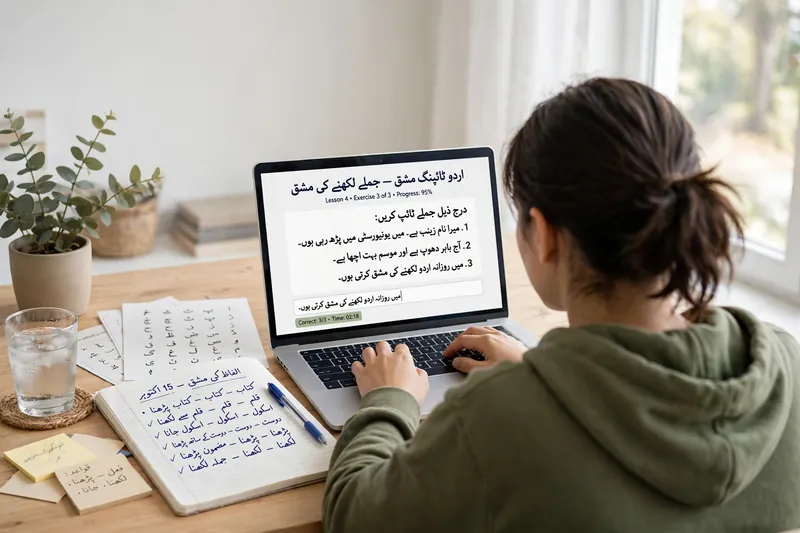
Practice complete sentences using the sample examples from earlier sections. Focus on entering each word correctly. Read the sentence before typing it. This habit improves concentration and helps you become comfortable with natural Urdu writing.
5-Minute Accuracy Review
Finish each session by reviewing your work. Look for missing letters, incorrect characters, and spelling mistakes. Correct every error carefully. This short review strengthens accuracy-focused learning and helps you identify areas that need more attention during future Urdu typing lessons.
Common Challenges Beginners Face
Most beginners face similar obstacles when learning Urdu typing. Recognizing these challenges makes them easier to overcome.
Many learners confuse similar-looking letters, especially during the early stages. Others forget key positions and rely heavily on looking at the keyboard. Frequent spelling mistakes can also slow progress. Some learners practice for a few days and then lose consistency. Keyboard dependency often becomes another common issue.
The best solution is regular repetition. Practice the same letters, words, and sentences until they feel familiar. Follow a structured approach instead of typing randomly. A simple daily routine helps build keyboard familiarity and supports long-term improvement. Consistent Urdu keyboard practice and targeted typing exercises create stronger habits over time.
Frequently Asked Questions
What is Urdu typing practice?
Urdu typing practice involves regularly typing Urdu letters, words, and sentences to build accuracy, keyboard familiarity, and confidence.
How often should I practice Urdu typing?
Daily practice works best. Even short sessions can help you develop stronger typing habits and maintain consistency.
Which Urdu keyboard layout should beginners use?
Beginners can start with the layout they find most comfortable. Many learners prefer a phonetic keyboard because it feels easier to understand.
Can I learn Urdu typing at home?
Yes. You only need an Urdu keyboard setup, regular practice, and a structured learning routine.
Why is accuracy important in Urdu typing?
Accuracy creates clear and readable text. It also reduces mistakes and improves the quality of your writing.
What should beginners practice first?
Start with common letters, simple words, and basic sentences. Build a strong foundation before moving to longer content.
Are sample words useful for learning Urdu typing?
Yes. Sample words introduce common letter combinations and help reinforce Urdu writing practice through repetition.
Conclusion
Urdu typing skills develop through patience, consistency, and regular practice. Small daily sessions often produce better results than occasional long sessions. Focus on keyboard familiarity, proper finger habits, and accurate typing from the beginning. Practice words, sentences, and common character patterns every day. Stay committed to your routine and review mistakes carefully. With steady effort and accuracy-focused learning, Urdu Typing Practice can become a natural and confident part of your daily routine.
Related Guides
Try our free Urdu Keyboard tool to type Urdu online instantly.