Urdu Fonts: Complete Guide to Types, Unicode, Nastaliq & Best Font Selection
🖋️ Try It: Compare Urdu Font Styles Live
Type any Urdu text and see it instantly in four different font styles:
Urdu Fonts shape how Urdu text looks across digital and printed media. They improve reading, design, and communication. The right font creates a better reading experience and supports your purpose. This guide explains font types, Unicode fonts, Nastaliq, and Naskh styles. It also covers font compatibility, readability, and practical selection tips. You’ll learn how to choose Urdu fonts that display correctly across devices while keeping text clear, consistent, and visually appealing.
What Are Urdu Fonts?
Definition of Urdu Fonts
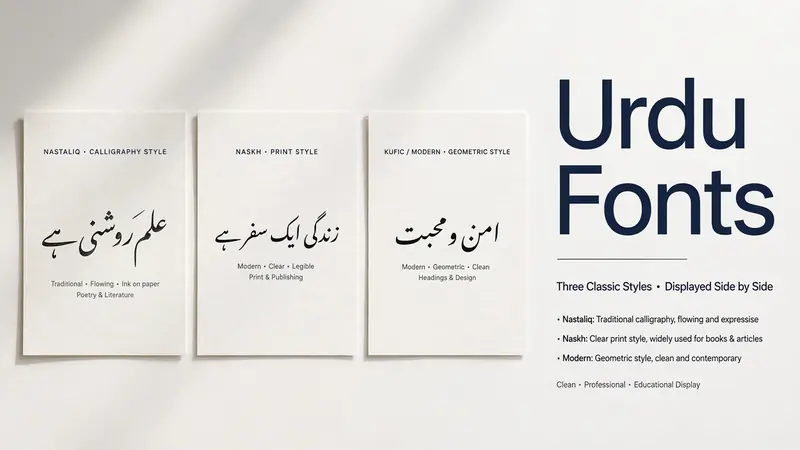
Urdu fonts are digital typefaces designed for the Urdu script. They display Urdu letters, glyphs, and ligatures with clarity. Every font family offers a unique typeface that supports different writing styles and reading experiences.
Why Urdu Fonts Matter
Urdu fonts improve readability and strengthen visual communication. They help readers understand text quickly. A suitable font also creates a professional appearance. Good typography keeps documents clear, attractive, and consistent across modern devices and software.
Common Uses
People use Urdu fonts in digital documents, graphic design, publishing, websites, social media posts, and printed materials. The right font enhances readability and matches the purpose of every project, from business documents to creative designs.
Types of Urdu Fonts
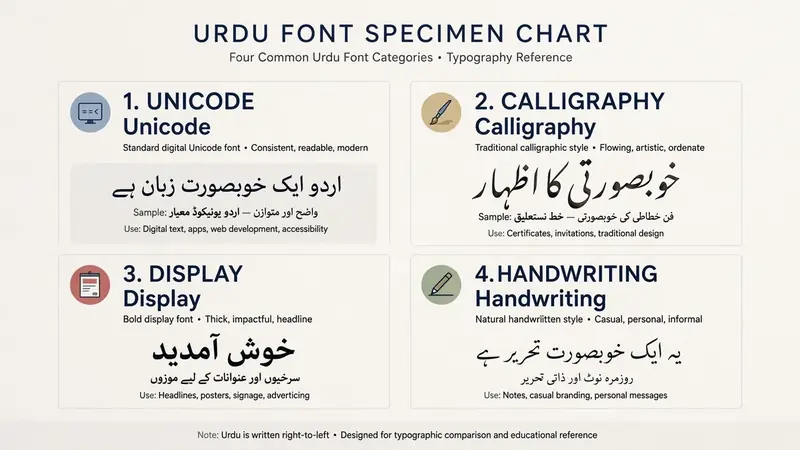
Different Urdu fonts serve different purposes. Each style offers unique features for reading, design, publishing, and digital content. Understanding these types helps you select the best font for your needs.
Unicode Urdu Fonts
Unicode Urdu fonts follow the modern international encoding standard. They display text consistently across supported devices and operating systems. These fonts offer universal compatibility with modern software and browsers. They also help search engines understand and index Urdu text correctly. Today, they remain the preferred choice for websites, digital documents, and professional publishing.
Non-Unicode Urdu Fonts
Non-Unicode fonts use older character encoding methods. Many legacy systems still support them. However, they often create compatibility issues on modern devices. Most users now prefer Unicode Urdu fonts for reliable performance.
Calligraphy Urdu Fonts
Calligraphy fonts reflect the artistic beauty of traditional Urdu writing. They create elegant text for invitations, certificates, branding, and decorative designs. Many stylish Urdu fonts use calligraphic strokes to produce a graceful appearance.
Display Urdu Fonts
Display fonts attract attention with bold and decorative designs. They work well for headlines, banners, posters, advertisements, and logos. These fonts prioritize visual impact over long-form reading.
Handwriting Urdu Fonts
Handwriting fonts recreate the natural look of handwritten Urdu text. Designers often use them for greeting cards, creative projects, educational materials, and social media graphics. They add warmth and personality to digital content.
Unicode Urdu Fonts Explained
Unicode has become the global standard for digital text. It allows Urdu content to display accurately across modern platforms while improving compatibility, readability, and long-term usability.
What Makes Unicode Important?
Unicode assigns a unique code to every character. This system keeps Urdu text consistent across devices and applications. It supports accurate glyph rendering, proper ligatures, and reliable typography. Unicode also simplifies multilingual publishing and modern digital communication.
Benefits of Unicode Fonts
Unicode fonts provide cross-platform support for Windows, macOS, Android, iOS, and the web. They improve search engine indexing because crawlers can read the text directly. Users can share documents without losing formatting. Unicode also ensures consistent display across browsers, applications, and supported devices.
Popular Unicode Urdu Fonts
Several Unicode fonts enjoy wide adoption. Jameel Noori Nastaleeq offers a classic Nastaliq style. Noto Nastaliq Urdu focuses on broad multilingual support. Nafees Nastaleeq delivers elegant typography for publishing. Urdu Typesetting remains a popular choice for Microsoft applications and professional documents.
Nastaliq vs Naskh Fonts
Both Nastaliq and Naskh play an important role in Urdu typography. Each style serves different reading and design needs. Understanding their strengths helps you choose the right font.
What Is Nastaliq?
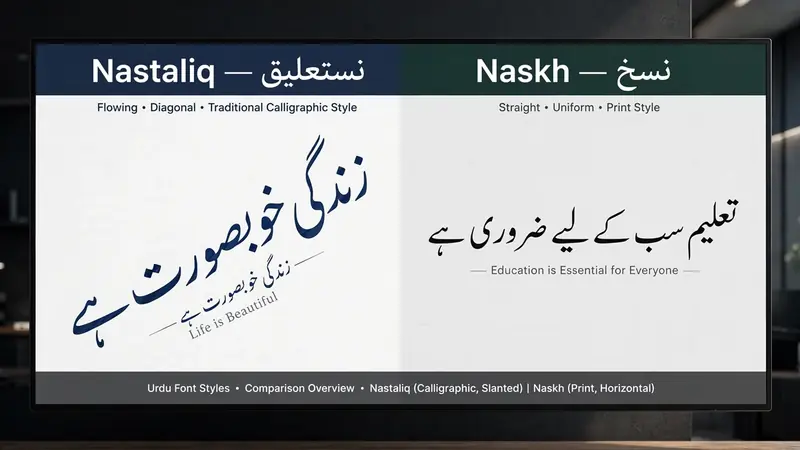
Nastaliq is the traditional writing style for Urdu. It features flowing lines, diagonal movement, and elegant calligraphy. Most books, newspapers, and literary works use Nastaliq because it reflects the cultural identity of the Urdu language.
What Is Naskh?
Naskh uses straight baselines and simple letter shapes. It offers a clean appearance and clear spacing. Many digital interfaces, educational materials, and multilingual documents use Naskh because readers recognize its structure quickly.
Key Differences
Nastaliq creates an artistic and traditional appearance. Naskh delivers a cleaner and simpler layout. Nastaliq suits books, newspapers, and calligraphy. Naskh performs well on digital screens and user interfaces. Both styles support professional publishing when paired with high-quality typography.
Which One Should You Choose?
Choose Nastaliq for traditional Urdu reading and elegant designs. Choose Naskh for modern interfaces and maximum screen clarity. Your purpose should guide your font selection.
Popular Urdu Fonts You Should Know
The following fonts remain popular because they balance readability, compatibility, and professional typography.
| Font Name | Font Style | Unicode Support | Best Use |
|---|---|---|---|
| Jameel Noori Nastaleeq | Nastaliq | Yes | Books, newspapers, documents |
| Noto Nastaliq Urdu | Nastaliq | Yes | Websites, mobile apps, multilingual content |
| Nafees Nastaleeq | Nastaliq | Yes | Publishing, educational materials |
| Mehr Nastaleeq | Nastaliq | Yes | Professional documents and printing |
| Alvi Nastaleeq | Nastaliq | Yes | Graphic design and creative projects |
| Urdu Typesetting | Naskh-based digital typeface | Yes | Microsoft Word, office documents, presentations |
Urdu Font Compatibility
Modern Unicode Urdu fonts work reliably across today’s operating systems and design software. Good compatibility keeps text consistent and readable.
Windows
Windows supports most modern Unicode Urdu fonts. Microsoft Word and other Office applications display them correctly after installation.
macOS
macOS works well with Unicode fonts that include proper Urdu glyphs. Many professional design applications support these fonts without issues.
Android
Android displays Unicode Urdu fonts in supported apps and browsers. Modern devices provide consistent rendering for everyday reading and writing.
iPhone & iPad
iOS and iPadOS support Unicode Urdu text across many applications. Compatible fonts improve readability and maintain a consistent appearance.
Popular Software Compatibility
Microsoft Word supports professional Urdu documents with compatible fonts. Adobe Photoshop, Adobe Illustrator, and Adobe InDesign handle Urdu typography for creative projects. Canva supports many Unicode Urdu fonts, although available font options depend on your account and uploaded font support.
How to Choose the Best Urdu Font
Choosing the right Urdu font depends on your content, audience, and platform. Focus on readability, compatibility, and purpose before making your final choice.
For Reading
Choose a font with clear letter shapes and balanced spacing. Good readability reduces eye strain during long reading sessions. Unicode fonts provide the best experience.
For Printing
Select fonts that produce sharp characters on paper. Professional Urdu fonts maintain consistent typography and preserve details in books, brochures, and reports.
For Graphic Design
Use fonts that match your project’s style and message. Calligraphy fonts create elegant designs, while display fonts produce bold and eye-catching headlines.
For Websites
Choose Unicode Urdu fonts that load efficiently and display consistently across browsers. Good screen quality and responsive typography improve the user experience.
For Social Media
Select stylish Urdu fonts that remain readable on small screens. Test your design on different devices before publishing. Clear typography always attracts more attention.
Readability and Typography Best Practices
Good typography improves every reading experience. Use an appropriate font size for your audience. Keep comfortable line spacing between text lines. Maintain strong contrast between text and background. Choose fonts with well-designed glyphs and smooth ligatures. Reliable font rendering keeps characters consistent across devices. Use the same font family throughout your content to create a professional appearance. Consistency always improves readability in print and digital formats.
Frequently Asked Questions
What is the best Urdu font?
Jameel Noori Nastaleeq remains a popular choice for traditional Urdu reading. Noto Nastaliq Urdu also offers excellent Unicode compatibility.
What is a Unicode Urdu font?
A Unicode Urdu font follows the Unicode Standard. It displays Urdu text consistently across supported devices, operating systems, and applications.
Which Urdu font is easiest to read?
Noto Nastaliq Urdu and Urdu Typesetting provide clear text for many digital uses. The best choice depends on your reading purpose.
Which font is best for Microsoft Word?
Urdu Typesetting works well in Microsoft Word. Many Unicode Nastaliq fonts also perform reliably in modern Office applications.
Which Urdu font works on Android?
Most modern Android devices support Unicode Urdu fonts. Noto Nastaliq Urdu provides broad compatibility across supported applications.
What is the difference between Nastaliq and Naskh?
Nastaliq offers a flowing calligraphic style. Naskh uses straighter lines and a simpler structure for digital readability.
Which font is best for graphic design?
Calligraphy fonts create elegant artwork. Display fonts work well for posters, branding, headlines, and creative visual projects.
Are Unicode Urdu fonts free?
Many Unicode Urdu fonts are available without cost. Others require commercial licenses. Always review the font license before professional use.
Which Urdu font is suitable for websites?
Unicode fonts offer the best choice for websites because they provide consistent display and strong compatibility across modern browsers.
Which Urdu font offers the best readability?
Choose a font with balanced spacing, clear glyphs, and quality typography. Your ideal font depends on the screen size and content type.
Conclusion
The best Urdu font depends on your purpose and audience. Unicode fonts provide reliable compatibility across modern platforms. Nastaliq and Naskh each offer unique strengths for different projects. Always prioritize readability, typography, and consistent display. A well-chosen font improves communication and creates a better experience in print and digital content.
Related Guides
- Urdu Font Converter
- Urdu Unicode – What It Is, Purpose, Benefits, and Why It Matters
- Urdu Unicode Converter
Try our free Urdu Keyboard tool to type Urdu online instantly.