
Urdu Writing Practice: Complete Guide to Improve Handwriting, Sentences, Vocabulary & Writing Skills
💡 Daily Urdu Writing Prompt Generator
Not sure what to write today? Get a fresh Urdu writing prompt and practice a short paragraph on it:
Copied!Urdu writing practice helps you build clear, confident, and accurate writing skills. Daily practice improves handwriting, sentence formation, vocabulary, and spelling. Small, steady efforts bring better results over time.
This guide suits beginners, students, parents, teachers, and anyone who wants to learn Urdu writing. You will discover simple methods that fit both classroom learning and self-study.
You will explore practical Urdu writing exercises that strengthen your skills step by step. Each section focuses on real writing instead of memorization alone. You will also learn how to write better sentences, develop strong paragraphs, expand your vocabulary, and build healthy spelling habits.
Whether you are starting with Urdu handwriting practice or looking to improve your overall writing, this guide offers practical tips you can apply every day. Regular practice, patience, and the right approach will help you write Urdu with greater accuracy and confidence.

What Is Urdu Writing Practice?
Definition
Urdu writing practice means writing Urdu letters, words, sentences, and paragraphs regularly. It helps you understand the Urdu language and express ideas clearly. Daily practice improves accuracy and builds lasting writing habits. It also strengthens your understanding of the Urdu alphabet and prepares you for more advanced writing skills over time.
Why Writing Practice Matters
Regular writing practice makes Urdu handwriting cleaner and easier to read. It teaches you how to form meaningful sentences with confidence. As you write more, your vocabulary grows naturally through repeated use. You also learn correct spelling and reduce common writing mistakes. These improvements make schoolwork, exams, and everyday communication easier. Consistent practice develops strong writing skills and helps you use the Urdu language with greater confidence. Education experts also recommend frequent handwriting practice because repetition improves literacy and writing fluency.
Essential Skills Before Starting Urdu Writing Practice
Understanding Urdu Letters
Start by learning the Urdu alphabet and recognizing every letter. Some letters look similar but differ in dots or shape. Careful letter recognition prevents confusion and builds a strong foundation for reading and writing.
Letter Formation and Joining
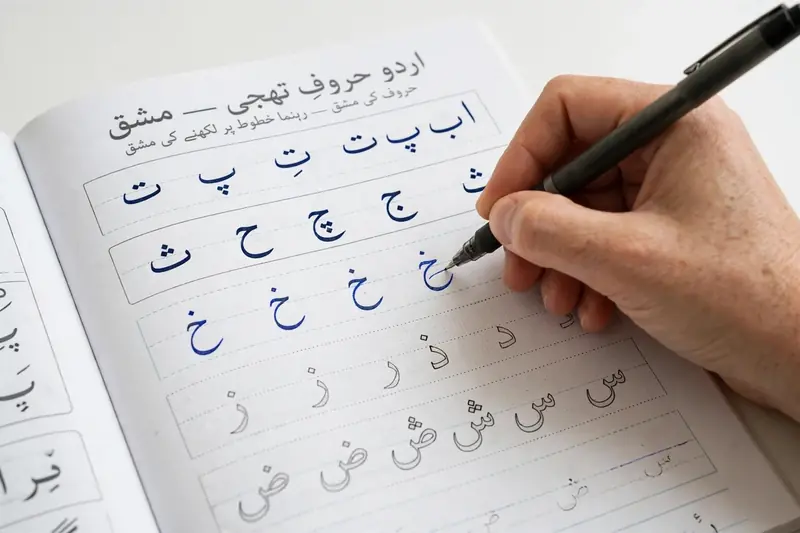
Urdu uses the Nastaliq script, where many letters connect to form words. Learn the correct letter formation and stroke order for each character. Practice isolated, initial, medial, and final letter forms before writing complete words.
Pencil Grip and Writing Posture
Hold your pencil with a relaxed pencil grip and sit in a comfortable position. Good posture gives you better control while writing. It also strengthens fine motor skills and helps you create neat, consistent handwriting during every practice session.
Daily Urdu Writing Exercises
Daily practice turns basic knowledge into strong writing habits. Begin with simple exercises and increase the difficulty over time. Follow a regular routine instead of long, occasional sessions. Even 15 to 20 minutes each day can improve your writing steadily.
Letter Writing Exercises
Practice each Urdu letter several times before moving to the next one. Focus on neat shapes and correct spacing. Compare your writing with a reliable textbook or workbook. Repeat difficult letters until they become natural.
Word Writing Exercises
Combine familiar letters to write simple words. Start with common words you use every day. Gradually add longer words to improve confidence. These Urdu writing exercises strengthen spelling and help you recognize word patterns faster.
Sentence Writing Practice
Write five to ten simple sentences every day. Use new vocabulary whenever possible. Read each sentence aloud to check if it sounds clear and complete. Review your work and correct mistakes immediately. Regular Urdu sentence writing builds confidence and improves grammar naturally.
Paragraph Writing Practice
Once sentence writing becomes easier, begin writing short paragraphs. Start with five or six connected sentences about one topic. Keep your ideas clear and organized. Increase the paragraph length as your skills improve. Regular Urdu paragraph writing and Urdu copy writing develop creativity and strengthen overall writing ability.
How to Improve Urdu Sentence Writing
Start with Simple Sentences
Write short sentences before attempting longer ones. Use familiar words and clear ideas. Strong sentence formation begins with simple patterns. This approach improves writing accuracy and builds confidence.
Expand Ideas Naturally
Add one new detail to each sentence during revision. Connect related ideas with suitable linking words. A growing vocabulary makes your writing more interesting. Regular reading and writing also improve expression.
Avoid Common Mistakes
Check the word order before finishing each sentence. Use correct grammar and accurate spelling. Remove unnecessary words that confuse the reader. Read your work again to ensure every sentence has a clear meaning and flows smoothly.

Paragraph Writing Practice in Urdu
Structure of a Good Paragraph
A strong paragraph begins with a clear opening sentence. The middle explains the main idea with supporting details. End with a closing sentence that completes the thought. Keep every sentence focused on one topic.
Organizing Ideas
Arrange your ideas in a logical order. Move from simple points to detailed explanations. Use smooth transitions between sentences. Good organization makes your writing easier to understand and remember.
Practice Topics
Practice with familiar topics before choosing difficult ones. Write about My School, My Family, My Best Friend, My Hobby, or A Rainy Day. These everyday subjects help you organize ideas, build confidence, and improve paragraph writing through regular practice.
Build a Strong Urdu Vocabulary
A rich vocabulary makes your writing clearer and more engaging. Learn useful words every day and use them often. Small improvements create lasting results.
Learn New Words Daily
Keep a vocabulary notebook and add five new words each day. Write their meanings and synonyms. Choose everyday words first because you will use them more often.
Use Words in Sentences
Practice every new word by writing one or two meaningful sentences. This habit improves understanding and helps you remember words longer. It also makes your writing sound natural.
Revise Frequently
Review your vocabulary notebook every week. Rewrite difficult words and use them in fresh sentences. Regular revision strengthens memory and increases confidence while writing.
Develop Better Urdu Spelling Habits
Correct spelling improves readability and builds trust in your writing. Good habits reduce errors and make every sentence easier to understand.
Common Spelling Mistakes
Many learners confuse similar words or forget important dots. Learn the correct spelling through repetition and careful word recognition. Slow, focused practice prevents repeated mistakes.
Proofreading Your Writing
Read every sentence after you finish writing. Check spelling, missing words, and punctuation. Self-checking helps you catch small errors before they become habits.
Daily Spelling Practice
Write difficult words several times each day. Repeat them during revision sessions. Consistent practice improves spelling accuracy and develops stronger writing habits.
Common Mistakes During Urdu Writing Practice
Many learners face similar challenges while improving their writing. Recognizing these mistakes helps you correct them quickly.
Incorrect letter formation makes words difficult to read. Practice each letter slowly until its shape becomes familiar.
Uneven spacing reduces readability. Leave equal spaces between words throughout your writing.
Missing dots can completely change a word’s meaning. Double-check every letter before moving ahead.
Poor sentence flow confuses readers. Arrange ideas in a logical order and connect related thoughts.
Weak vocabulary limits expression. Learn and use new words every week.
Frequent spelling errors lower writing quality. Proofread every page and rewrite incorrect words until they become familiar.
Tips to Improve Urdu Writing Faster
Progress comes from smart practice, not speed. Build a simple routine and follow it every day.
Practice writing for at least fifteen minutes daily. Read Urdu books, children’s stories, and newspapers to observe natural writing styles. Copy quality passages to understand sentence patterns and vocabulary. Review your mistakes after every practice session and avoid repeating them. Write short paragraphs from memory without looking at examples. Compare your work with reliable learning materials and keep improving. Consistency brings better results than occasional long practice sessions.

Frequently Asked Questions
What is Urdu writing practice?
Urdu writing practice means regularly writing letters, words, sentences, and paragraphs to improve handwriting, vocabulary, spelling, and overall writing skills.
How can beginners improve Urdu writing?
Start with the Urdu alphabet. Practice letters daily, write simple words, and gradually move to sentences and paragraphs.
How much should I practice daily?
Practice for 15 to 20 minutes every day. Regular practice produces better results than long sessions once a week.
How can I improve Urdu handwriting?
Focus on correct letter formation, proper spacing, and a comfortable pencil grip. Write neatly instead of writing quickly.
How do I improve Urdu spelling?
Learn common spellings, proofread your work, and rewrite difficult words often. Daily repetition strengthens memory.
What is the best way to build Urdu vocabulary?
Read Urdu books and newspapers, keep a vocabulary notebook, and use every new word in your writing.
How can I write better Urdu paragraphs?
Start with one clear idea. Support it with related sentences and finish with a meaningful conclusion. Practice with familiar topics first.
Is daily writing practice necessary?
Yes. Daily practice improves handwriting, sentence structure, vocabulary, spelling, and writing confidence through consistent repetition.
Final Thoughts
Urdu writing practice becomes easier when you follow a regular routine. Start with letters, then move to words, sentences, and paragraphs. Build your vocabulary and improve your spelling through daily revision. Every practice session strengthens your writing skills and boosts confidence. Stay patient and keep learning. Small improvements each day will help you write clear, accurate, and confident Urdu over time.
Related Guides
- Urdu Typing Lessons: Complete Beginner to Advanced Learning Guide
- How to Type in Urdu
- Urdu Typing Practice: A Complete Daily Guide to Building Accuracy and Confidence
Try our free Urdu Keyboard tool to type Urdu online instantly.