Urdu Keyboard Special Characters
📋 Urdu Special Characters — Click to Copy
Click any character to copy it to your clipboard, then paste it anywhere.
Urdu Keyboard Special Characters help you write Urdu words correctly. These characters include letters that make Urdu different from many other languages. They support clear writing and accurate pronunciation. Some letters look almost the same, but they have different sounds and meanings. Choosing the right letter keeps your writing correct and easy to read.
When you learn these Urdu special characters, you improve your Urdu typing skills and reduce common spelling mistakes. Every Urdu keyboard includes these important letters because they belong to the Urdu script. The script comes from the Arabic script but adds extra letters for Urdu sounds. Understanding these Urdu keyboard characters helps students, writers, and professionals communicate with confidence. It also makes your text more natural and easier for native readers to understand.
What Are Urdu Keyboard Special Characters?
Urdu Keyboard Special Characters are letters that belong only to the Urdu language or have a special role in Urdu writing. They allow writers to represent sounds that the standard Arabic alphabet cannot express. These letters form an important part of the Urdu writing system.
Urdu uses the Perso-Arabic script, which extends the Arabic script with several additional letters. These extra characters match the unique sounds of Urdu and improve reading accuracy. They also help preserve the original pronunciation of words.
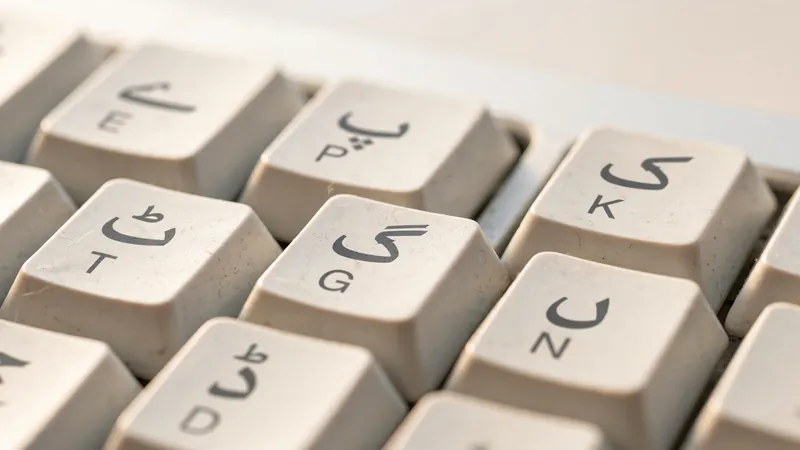
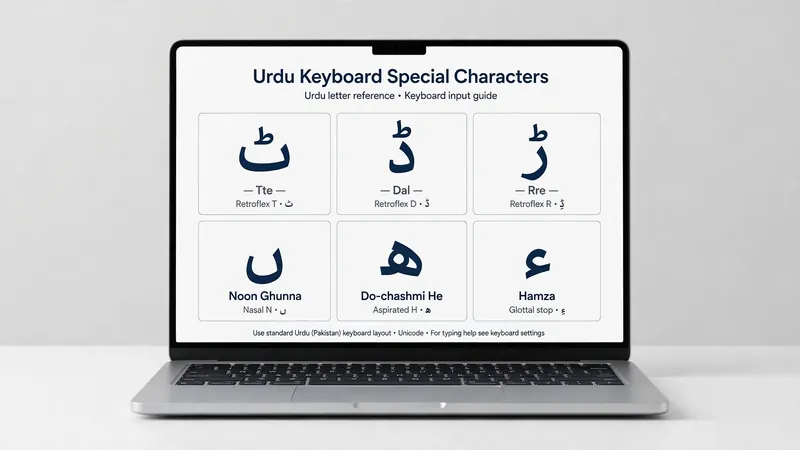
For example, letters like ٹ, ڈ, ڑ, and ں do not appear in the standard Arabic alphabet. Urdu adds them to represent sounds that occur naturally in everyday speech.
Most Urdu text appears in the Nastaliq writing style. This style connects letters beautifully while following the rules of the Urdu language. Learning these Urdu-specific letters helps you read and write with greater confidence. It also makes your writing more accurate and easier for others to understand.
Urdu-Specific Letters Found on the Keyboard
Letters Unique to Urdu
The Urdu keyboard includes several letters that make the language unique. These letters represent sounds that the standard Arabic alphabet does not contain. Learning them helps you write correct Urdu words.
Here are some common Urdu-specific letters:
- ٹ represents a hard T sound. You see it in words like ٹوپی.
- ڈ represents a hard D sound. A common example is ڈاکٹر.
- ڑ creates a rolling sound. It appears in words like پہاڑ.
- ں is called Noon Ghunna. It adds a nasal sound, as in ماں.
- ے usually appears at the end of many words, such as میرے.
- ھ combines with other letters to create breathy sounds. You can find it in words like بھائی and پھول.
Each letter has a specific purpose. You should use it only where the word requires it. Replacing one letter with another can change the pronunciation or even the meaning.
Why These Letters Matter
Urdu-specific letters protect the original sound of each word. They help readers understand words exactly as speakers pronounce them.
Some letters look similar, but they produce different sounds. For example, ت and ٹ are not interchangeable. The same rule applies to د and ڈ, or ر and ڑ. Using the wrong letter creates spelling mistakes and may confuse the reader.
Correct letter selection also improves Urdu writing accuracy. It shows that you understand the rules of the Urdu alphabet and Urdu orthography. These rules help keep the language consistent across books, newspapers, schools, and digital communication.
Learning these Urdu keyboard characters takes practice, but the effort pays off. Your writing becomes clearer, more professional, and easier for every Urdu reader to understand.
Extended Urdu Characters and Their Usage
Common Extended Characters
Extended Urdu characters help represent sounds that basic Arabic letters cannot express. These letters became part of Urdu as the language evolved. They make Urdu writing more accurate and natural.
Some common extended Urdu characters include ٹ, ڈ, ڑ, ں, ے, and ھ. Each letter has a unique sound and purpose. For example, ٹ creates a hard T sound, while ڑ produces a rolling R sound. ں adds a nasal sound that changes how a word is spoken.
These characters strengthen the Urdu script by matching spoken language with written text. They also help readers pronounce words correctly. Without them, many Urdu words would lose their original meaning or sound. Learning these character variants is an important step toward accurate Urdu typing and confident writing.
When to Use Extended Characters
Always use extended Urdu characters where standard spelling requires them. Avoid replacing them with similar-looking letters.
For example, write پہاڑ instead of پہار because ڑ creates the correct sound. Write ماں instead of مان because ں adds the proper nasal pronunciation. Use میرے with ے because it follows standard Urdu spelling.
Many beginners substitute letters that look similar. This habit causes spelling errors and changes pronunciation. Reading newspapers, books, and trusted educational materials helps you recognize the correct forms. Over time, using the right extended Urdu characters becomes natural and improves your writing quality.
Character Variants You Should Know
Similar-Looking Letters
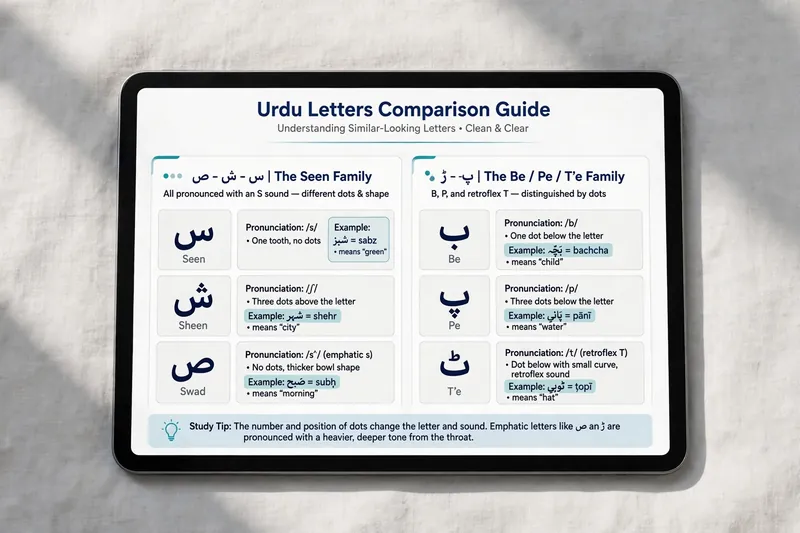
Several Urdu letters look alike, but they represent different sounds. Knowing these character variants helps you avoid common mistakes.
For example, ت and ٹ both sound like T, but they have different pronunciations. د and ڈ also differ in sound. The same applies to ر and ڑ. Another common pair is ن and ں. Although they appear similar, each serves a different purpose.
Beginners often confuse ی and ے because both appear in many words. However, they follow different spelling rules. Using one in place of the other makes a word incorrect.
Learning these Urdu character differences improves reading and writing. It also builds confidence when typing longer sentences.
Choosing the Correct Character
The correct Urdu letters make your writing clear and professional. Every word follows a standard spelling that readers recognize.
For example, لڑکا is correct because it uses ڑ. Replacing it with ر changes the spelling and pronunciation. Likewise, ماں requires ں to produce the correct nasal sound.
The easiest way to learn correct character variants is through regular reading. Books, newspapers, and educational websites follow standard Urdu spelling. Pay attention to how words appear in different contexts.
When you type carefully, readers understand your message without confusion. Correct letter selection also improves readability and reflects a better understanding of Urdu writing rules.
Rare Urdu Characters and Where They Appear
Less Common Characters
Some rare Urdu characters appear only in specific words. You may find them in personal names, classical poetry, religious texts, or older literature.
These characters are not common in everyday writing, but they remain part of the language. They help preserve the original spelling and pronunciation of traditional words. Readers may also notice them in historical books or academic publications.
Understanding these rare Urdu characters helps you recognize unfamiliar words without confusion.
Should Beginners Learn Them?
Beginners should first master the common Urdu letters before studying rare ones. This approach builds a strong foundation and makes learning easier.
After you become comfortable with everyday Urdu writing, you can explore less common characters. They become useful when reading poetry, historical documents, or formal literature.
Do not feel pressured to memorize every rare letter immediately. Focus on accurate Urdu spelling and correct usage in daily communication. As your reading improves, you will naturally recognize these characters and understand where they belong.
Best Practices for Writing Accuracy
Avoid Common Character Mistakes
Small typing mistakes can change the meaning of an Urdu word. Always choose the correct letter instead of a similar-looking one. For example, do not replace ٹ with ت or ڑ with ر. These letters produce different sounds and follow different spelling rules. Also, use ں only where a nasal sound belongs. Select ے and ی carefully because each has a different role. Reading quality Urdu books and articles helps you recognize the correct forms. Regular practice improves writing accuracy and strengthens your Urdu typing accuracy over time.
Check Your Writing Before Sharing
Always review your writing before sending or publishing it. A quick check helps you catch spelling mistakes and incorrect letter choices. Read each sentence slowly and compare unfamiliar words with a trusted Urdu dictionary if needed. Pay close attention to similar-looking letters that often cause errors. If you use a digital keyboard, confirm that it entered the intended character. Careful proofreading improves correct Urdu spelling and makes your message easier to understand. Accurate writing builds confidence and creates a better reading experience for everyone.
Frequently Asked Questions
How many special characters are used in Urdu?
Urdu includes several unique letters beyond the standard Arabic alphabet. These additional characters represent sounds found only in Urdu and are part of its official writing system.
Are Urdu-specific letters different from Arabic letters?
Yes. Urdu uses the Perso-Arabic script but adds extra letters such as ٹ, ڈ, ڑ, ں, and ے. These letters match Urdu pronunciation more accurately.
Why are some Urdu letters unique?
Urdu developed sounds that the Arabic alphabet could not represent. New letters were introduced to preserve correct pronunciation and maintain clear communication.
Which Urdu letters are commonly confused?
Beginners often confuse ت and ٹ, د and ڈ, ر and ڑ, ن and ں, and ی and ے. Learning their differences improves spelling and pronunciation.
How can I improve writing accuracy?
Practice typing every day. Read authentic Urdu content, use the correct keyboard characters, and proofread your work before sharing. Regular practice leads to better spelling and clearer writing.
Conclusion
Urdu uses several unique letters that extend beyond the standard Arabic alphabet. These Urdu-specific and extended characters help represent sounds found only in the language. Learning when and how to use them improves spelling, pronunciation, and overall writing quality. Choosing the correct character also makes your text clearer and easier to read. Start with the most common letters, then learn less common ones as your skills grow. With regular practice and careful proofreading, you will write more accurate Urdu and communicate with greater confidence.
Related Guides
Try our free Urdu Keyboard tool to type Urdu online instantly.